

May Days: Large Animal Emergency Rescue Training Builds Critical Skills
Equine Guelph continues to strengthen emergency preparedness through hands-on Large Animal Emergency Rescue training
Port Perry & Lynden, ON (May 2026) – Two Large Animal Emergency Rescue (LAER) awareness-level workshops held May 1 and May 27 brought together first responders, veterinarians, animal professionals, and horse owners to build critical skills for safely responding to large animal emergencies.
These hands-on, scenario-based workshops are designed to improve safety, communication, and coordinated response during high-risk situations involving horses and other large animals.
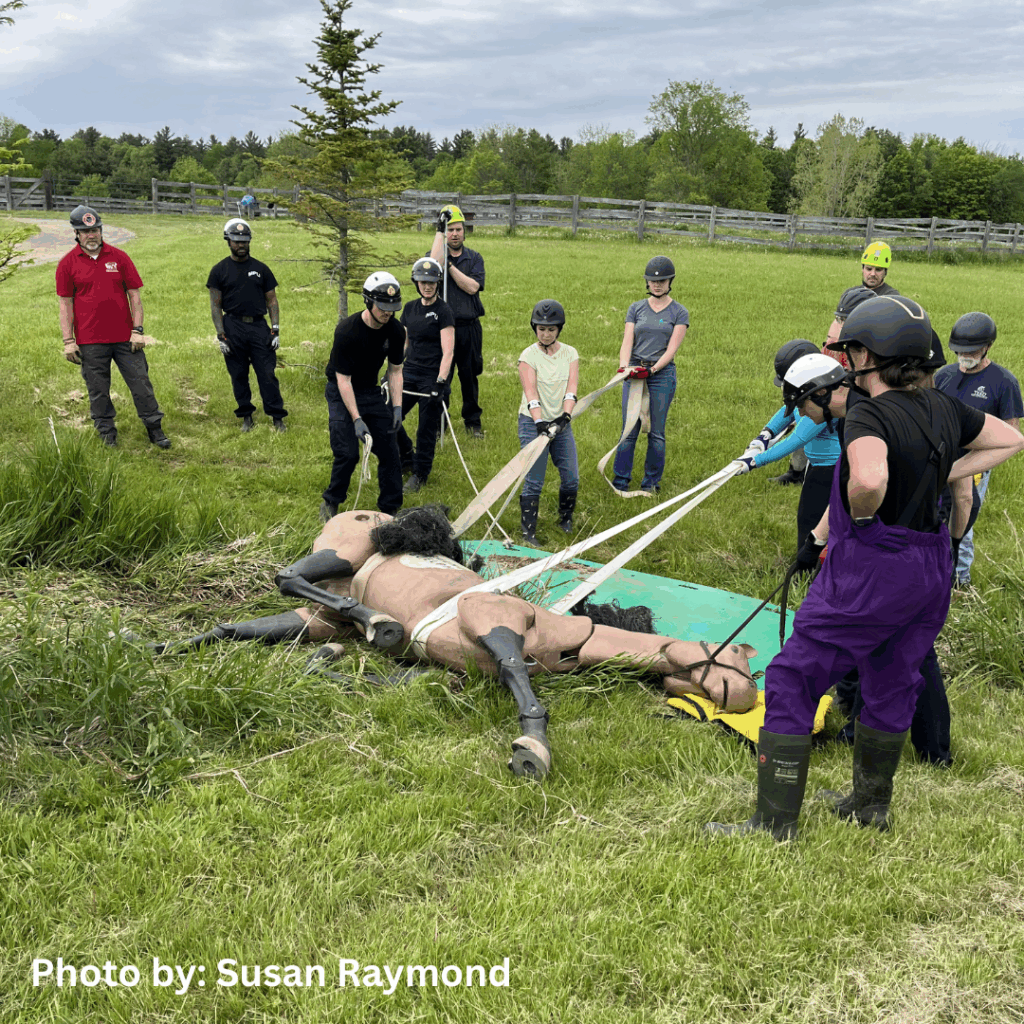
The May 1 workshop at Restoration Ranch in Port Perry, ON reached full capacity, drawing first responders along with several staff members from the Toronto Zoo and Toronto Wildlife Centre. Participants worked through practical rescue scenarios, gaining experience with equipment, assisted movement techniques, and best practices applicable across species.
Andrew Wight, Toronto Wildlife Centre, was amazed with how many skills he gained in the awareness level training day and is keen to follow up with the next level of large animal rescue training offered by Equine Guelph.
“The proper use of specialized equipment and precise positioning of webbing around the animal’s body are crucial for successful lifting or dragging a large animal to safety,” says lead instructor Victor MacPherson, EBSP Rescue.
On May 27, the second awareness-level workshop took place at HollyOaks Farm in Lynden, ON west of Hamilton, attracting a diverse group of participants including police officers, firefighters, veterinary students, and horse owners. The session reinforced the importance of preparation, teamwork, and clear roles during emergency response. This training was organized in partnership with the Hamilton Mounted Police (returning for their sixth training session).
For mounted units, the risks are very real. Sergeant Amberlee Rodgers, who leads the service’s mounted patrol unit and oversees the horses at HollyOaks Farm, notes that her team is frequently called to assist in large animal incidents, from loose animals in traffic to complex rescue situations. Training is critical not only for responding to public emergencies, but also for protecting officers and horses in the event of an accident involving the unit itself.
Media coverage from CTV News Kitchener highlighted the growing demand for this specialized training and the value it brings to both responders and animal owners. Flamborough Today reported how veterinary students, and first responders learned how to handle a large animal rescue safely and how a large animal can turn dangerous quickly when size, strength and fear collide.
Participants came away with a solid understanding of the importance of planning and teamwork when responding to unpredictable incidents.
“It was such a fantastic day,” says horse farm owner Jennifer MacNicol. “I’m actually really wanting my husband to take the course as well so that everyone on property is more prepared in case of an emergency.”
Some key takeaways from participants included:
- The importance of preparation, because emergencies can happen at any point in time
- The value of teamwork and recognizing individual strengths
- Applying practical skills in real-world situations
- Taking proper precautions and investing in training to ensure one can support, rather than hinder, first responders
One participant even encountered a real-life situation enroute to training, assisting with an unhandled loose mule beside a busy roadway, highlighting how quickly these skills can become relevant. Having just finished the online portion of the LAER course the night before they were ready to act employing “low stress movement” and keeping enough distance not to incite a chase!
Dr. Chris Riley, Chair of the Department of Clinical Studies at the Ontario Veterinary College, opened both workshops with an overview of the veterinary role in emergency situations. The sessions emphasized the importance of collaboration, clear communication, and understanding roles among all responders involved in animal incidents.
Participants then moved into hands-on training led by LAER lead instructor Victor MacPherson, supported by an experienced team of assistant trainers. Using a life-size, horse mannequin named “Rusti,” attendees practiced safely extricating animals from challenging scenarios, including trailer accidents, cast horses, and situations involving both horse and rider down on an incline.
Equine Guelph thanks the supporters, facilitators, and participants of these important large animal emergency rescue workshops. A special thank you to Linda Rawlinson (Holly Oaks Farm) and Samantha McFadyen (Restoration Ranch) for hosting the workshops.
Equine Guelph would also like to thank Grand River Agricultural Society (GRAS) for its foundational funding of the Large Animal Emergency Rescue program.
Delivered by Equine Guelph (University of Guelph), in the past decade, the LAER program has continued to grow and expand its offerings to a varied group. If you are interested in helping to build this program or would like to discuss offering this program in your area or to your members, please contact Susan Raymond at Equine Guelph. Courses can be offered on a cost-recovery basis, or through sponsorship, to communities/individuals who would like to expand the reach of this training program.
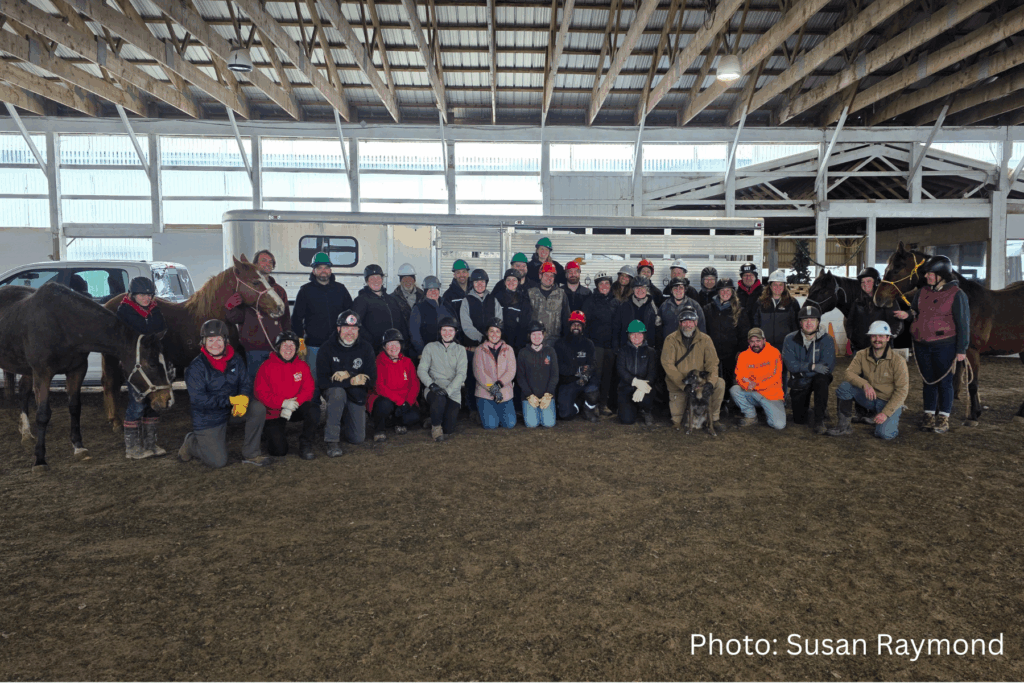
More LAER Training Ahead
An upcoming Operations Level workshop for emergency responders only (including preservice) will be held on Sept 12 & 13 at Sunrise Therapeutic Riding & Learning Centre in Puslinch, ON. Registration will open soon.
LAER hands‑on workshops cover key safety principles, assisted movement techniques, rescue tools, and scenario‑based exercises for responding to large animal emergencies. Hands‑on course registrants will also receive free access to the new Large Animal Emergency Rescue (LAER) online offering proudly offered with the Grand River Agricultural Society as a program partner.
“Our large animal emergency rescue program prioritizes the welfare and well-being of animals involved in incidents, while emphasizing the safety of those involved in rescue operations,” said Dr. Susan Raymond, facilitator of the Large Animal Emergency Rescue program at Equine Guelph. “We are over 10 years offering this important specialized training and we are committed to enhancing large animal rescue capabilities through education and practical training. We are fortunate to have an incredibly dedicated team.”
For inquiries about LAER training or hosting a workshop, please contact:
Susan Raymond
[email protected]
Program Coordinator, Large Animal Emergency Rescue
Equine Guelph
