

Research
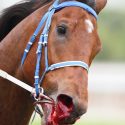
Evolving Understanding in Exercise Induced Pulmonary Hemorrhage
EIPH: More Than a Nosebleed Exercise‑induced pulmonary hemorrhage, EIPH or “bleeding”, has been recognized for centuries. The true cause of this disease was misunderstood until modern diagnostic tools revealed that bleeding actually comes from the lungs, not the nose. For much of its history, the condition was understood as the rare and dramatic episodes of…
What the Hay?
Chewing on Hay Research: Preparation, Delivery, and Horse Health Hay may look like the simplest part of a horse’s diet, but as University of Guelph professor Dr. Anna Kate Shoveller explains, it’s the foundation of equine health and far more complex than it appears. Horses are designed to graze for 14–18 hours a day, relying…
Understanding Potomac Horse Fever
What Every Horse Owner Should Know As summer arrives, veterinarians and horse owners across Canada grow increasingly concerned about Potomac Horse Fever (PHF). Once rare, the disease is appearing more often in regions north of the U.S. Potomac is now considered endemic in Ontario, Quebec, Nova Scotia, Manitoba, Alberta, and British Columbia. What Is Potomac…

Equine Guelph 2026 Research Annual
Equine Guelph 2026 Research Annual – Volume 23 Equine Guelph’s 23rd Research Annual recaps impactful research from 2025, showcasing studies that advance equine health and welfare. Our feature article explores nephrosplenic entrapment and evidence supporting preventative surgical techniques for horses at risk of recurrence. Included in this feature is a video interview with Dr. Nicola…
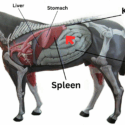
Study Supports Preventive Surgery to Reduce Recurring Entrapment Colic
Horse owners worry over recurring colic is justified When a horse suffers nephrosplenic entrapment, a specific type of displacement colic, the risk of it happening again can be elevated. For high-performance horses, that means more than pain and emergency bills; it can disrupt training schedules and competition plans. A preventative surgery called laparoscopic closure of…
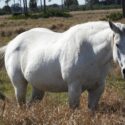
The Overweight Horse – A New Year’s Resolution
Preventing Obesity Equine Guelph has made a New Year’s Resolution to empower horse owners to learn more about their horse’s nutrition and needs. January, dubbed by Equine Guelph as Nutrition Education Month, will be dedicated to learning more about the overweight horse – increasing awareness of what caregivers can do to prevent their horses from…
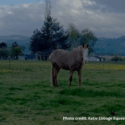
Survey Reveals Emotional and Practical Challenges in Managing Horse Weight
Research collected by University of Guelph post doctoral scholar Megan Ross as part of her recent PhD work from the Atlantic Veterinary College and in collaboration with Dr. Katrina Merkies shines a light on the complex decisions horse owners face when managing equine weight. Previous research shows that nearly 29% of Canadian horses are overweight…
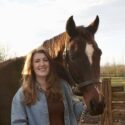
Lesson Horses in Canada: A Closer Look at Care, Challenges, and the Road Ahead
Lesson horses are the heart of equestrian education in Canada. They teach beginners how to ride, help build confidence, and often serve as the first connection between people and horses. For many riders, these horses are the gateway to a lifelong passion—and for researcher Caleigh Copelin, they were the reason she entered the field of…
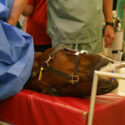
Rate of Penicillin Administration Affects Arterial Blood Pressure
Veterinarians often give penicillin to horses during surgery to prevent infection, but the speed of injection may influence how the horse’s cardiovascular system reacts. In a study of 29 horses under general anesthesia, researchers compared two methods of giving penicillin: a fast injection over one minute and a slower one over ten minutes. Both methods caused…
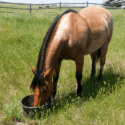
Can Whole Food Nutrition Combat Leaky Gut in Horses?
New University of Guelph study explores the gut-health potential of activated hemp seed powder Could a simple, nutrient-rich feed ingredient hold the key to managing one of the most elusive conditions in equine health? A new research initiative at the University of Guelph aims to shed light on a little-understood and potentially widespread condition in…

Equine Guelph Annual Report
2024/25 Year in Review From international student engagement to groundbreaking research and career-building programs, it’s been a year of impact and innovation! Check out our Annual Report infographic for a snapshot of the highlights—including awards, 36 research projects supported, triple last year’s video views, and over 700 students taking our award-winning online courses around the globe. Explore…
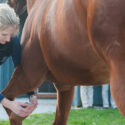
What Diagnostics are Available for Common and Complex Equine Lameness?
Dr. Taralyn McCarrel’s journey into equine lameness began with her early experiences riding and working at a hunter barn. Recognizing the critical importance of soundness for both horses and riders, she developed a keen eye and ear for detecting lameness issues. Her passion for veterinary medicine led her to graduate from the Ontario Veterinary College…
Follow Equine Guelph

🐴 When a large animal is in trouble… every second counts. ![]()
![]() Don’t panic
Don’t panic ![]() -Know who to call
-Know who to call ![]() -Have the right tools
-Have the right tools ![]() -Use safe, effective techniques
-Use safe, effective techniques ![]()
![]() Preparation isn’t optional—it’s essential.
Preparation isn’t optional—it’s essential. ![]() Be ready before an emergency happens.
Be ready before an emergency happens. ![]()
![]() Take the Large Animal Emergency Rescue (LAER) course. Now available ON-DEMAND @TheHorsePortal.ca.
Take the Large Animal Emergency Rescue (LAER) course. Now available ON-DEMAND @TheHorsePortal.ca. ![]()
![]() Flexible format | Certificate of Completion | Self-paced (1-year course access)
Flexible format | Certificate of Completion | Self-paced (1-year course access) ![]()
![]() @albertaequestrian, @EquineYukon, @equestrianNovaScotia, @HorseCouncil, @IslandHorseCouncil, @ManitobaHorseCouncil, @EquineNB, @NLequine, @onequestrian, @SaskHorse, @AceraInsurance, @EquestrianCan
@albertaequestrian, @EquineYukon, @equestrianNovaScotia, @HorseCouncil, @IslandHorseCouncil, @ManitobaHorseCouncil, @EquineNB, @NLequine, @onequestrian, @SaskHorse, @AceraInsurance, @EquestrianCan
"Being new to equine journalism is a strength."![]() Meet Your Equine Journalism Instructor: Anna Sochocky.
Meet Your Equine Journalism Instructor: Anna Sochocky.![]()
![]() Learn from an award-winning equine journalist, nonfiction writer, and communications professional in #EquineGuelph’s accredited, 12-week online #Equine Journalism course!
Learn from an award-winning equine journalist, nonfiction writer, and communications professional in #EquineGuelph’s accredited, 12-week online #Equine Journalism course!![]()
![]() Anna Sochocky is the owner of Equi-Libris LLC and has built a successful career writing about horses, health, and history. Her work has appeared in leading equine publications including Equus Magazine, Western Horseman, Horse Illustrated, The Chronicle of the Horse Untacked, Sidelines Magazine, and The Horse Magazine, as well as numerous literary journals.
Anna Sochocky is the owner of Equi-Libris LLC and has built a successful career writing about horses, health, and history. Her work has appeared in leading equine publications including Equus Magazine, Western Horseman, Horse Illustrated, The Chronicle of the Horse Untacked, Sidelines Magazine, and The Horse Magazine, as well as numerous literary journals.![]()
![]() A multiple award-winning writer, Anna has been recognized by American Horse Publications, New Mexico Press Women, and the National Federation of Press Women. She also received the 2024 New Mexico Writers Douglas Preston Travel Grant and has held prestigious literary residencies with A Room of Her Own Foundation and the Loft Literary Center.
A multiple award-winning writer, Anna has been recognized by American Horse Publications, New Mexico Press Women, and the National Federation of Press Women. She also received the 2024 New Mexico Writers Douglas Preston Travel Grant and has held prestigious literary residencies with A Room of Her Own Foundation and the Loft Literary Center.![]()
![]() Beyond her writing achievements, Anna brings extensive communications expertise from her career as a media relations director and legislative affairs consultant. She has developed and led successful communications strategies, secured national media coverage, cultivated media relationships, prepared leaders for interviews, and managed online and social media communications programs reaching tens of thousands of people.
Beyond her writing achievements, Anna brings extensive communications expertise from her career as a media relations director and legislative affairs consultant. She has developed and led successful communications strategies, secured national media coverage, cultivated media relationships, prepared leaders for interviews, and managed online and social media communications programs reaching tens of thousands of people.![]()
![]() Holding a Master of Arts in Creative Writing from Hamline University, where she graduated Magna Cum Laude and received the Outstanding Creative Thesis Award, Anna combines academic excellence with real-world industry experience.
Holding a Master of Arts in Creative Writing from Hamline University, where she graduated Magna Cum Laude and received the Outstanding Creative Thesis Award, Anna combines academic excellence with real-world industry experience. ![]()
![]() As a lifelong equestrian and horse owner with experience in hunter-jumper competition and dressage, she understands both the horse industry and the stories that shape it.
As a lifelong equestrian and horse owner with experience in hunter-jumper competition and dressage, she understands both the horse industry and the stories that shape it.![]()
![]() Hone your writing skills with Equine Guelph's 12-Week Equine Journalism course offered September 14, 2026 in partnership with @UofGuelphSCS.
Hone your writing skills with Equine Guelph's 12-Week Equine Journalism course offered September 14, 2026 in partnership with @UofGuelphSCS.![]()
![]() Early Bird pricing ends August 15th!
Early Bird pricing ends August 15th!![]() uoguel.ph/eq-journalism
uoguel.ph/eq-journalism![]()
![]() #EquineMedia #EquineJournalism #HorseStories #EquineGuelph #EquineCareers #WorkWithHorses
#EquineMedia #EquineJournalism #HorseStories #EquineGuelph #EquineCareers #WorkWithHorses
What makes a great equine article?![]() It’s not just heart—it’s facts, clarity, and credibility.
It’s not just heart—it’s facts, clarity, and credibility.![]()
![]() Hone your writing skills in Equine Journalism with #EquineGuelph's online, accredited, 12-Week Equine Journalism course offered September 14, 2026 in partnership with @UofGuelphSCS.
Hone your writing skills in Equine Journalism with #EquineGuelph's online, accredited, 12-Week Equine Journalism course offered September 14, 2026 in partnership with @UofGuelphSCS. ![]()
![]() Early Bird pricing ends August 15th!
Early Bird pricing ends August 15th! ![]()
![]() uoguel.ph/eq-journalism
uoguel.ph/eq-journalism![]()
![]() #EquineMedia #EquineJournalism #HorseStories #EquineGuelph #EquineCareers #WorkWithHorses
#EquineMedia #EquineJournalism #HorseStories #EquineGuelph #EquineCareers #WorkWithHorses