

Equine News

Evolving Understanding in Exercise Induced Pulmonary Hemorrhage
EIPH: More Than a Nosebleed Exercise‑induced pulmonary hemorrhage, EIPH or “bleeding”, has been recognized for centuries. The true cause of this disease was misunderstood until modern diagnostic tools revealed that bleeding actually comes from the lungs, not the nose. For much of its history, the condition was understood as the rare and dramatic episodes of…
What the Hay?
Chewing on Hay Research: Preparation, Delivery, and Horse Health Hay may look like the simplest part of a horse’s diet, but as University of Guelph professor Dr. Anna Kate Shoveller explains, it’s the foundation of equine health and far more complex than it appears. Horses are designed to graze for 14–18 hours a day, relying…
Understanding Potomac Horse Fever
What Every Horse Owner Should Know As summer arrives, veterinarians and horse owners across Canada grow increasingly concerned about Potomac Horse Fever (PHF). Once rare, the disease is appearing more often in regions north of the U.S. Potomac is now considered endemic in Ontario, Quebec, Nova Scotia, Manitoba, Alberta, and British Columbia. What Is Potomac…

Equine Guelph 2026 Research Annual
Equine Guelph 2026 Research Annual – Volume 23 Equine Guelph’s 23rd Research Annual recaps impactful research from 2025, showcasing studies that advance equine health and welfare. Our feature article explores nephrosplenic entrapment and evidence supporting preventative surgical techniques for horses at risk of recurrence. Included in this feature is a video interview with Dr. Nicola…
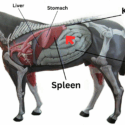
Study Supports Preventive Surgery to Reduce Recurring Entrapment Colic
Horse owners worry over recurring colic is justified When a horse suffers nephrosplenic entrapment, a specific type of displacement colic, the risk of it happening again can be elevated. For high-performance horses, that means more than pain and emergency bills; it can disrupt training schedules and competition plans. A preventative surgery called laparoscopic closure of…
Follow Equine Guelph

🐴 School’s almost out. ![]()
![]() #EquineGuelph has the perfect activity for young horse enthusiasts during those rainy days. An online course full of fun activities and horse talk for teens!
#EquineGuelph has the perfect activity for young horse enthusiasts during those rainy days. An online course full of fun activities and horse talk for teens! ![]()
![]() Horse Behaviour & Safety @TheHorsePortal.ca offers two weeks of engaging material, with a full year of access to learn at a leisurely pace.
Horse Behaviour & Safety @TheHorsePortal.ca offers two weeks of engaging material, with a full year of access to learn at a leisurely pace. ![]()
![]() Did you know?
Did you know? ![]() Horses have their own personal space, known as a flight zone.
Horses have their own personal space, known as a flight zone. ![]()
![]() A calm, confident horse will have a smaller flight zone. A nervous or less confident horse will have a larger flight zone—which calls for a different, more cautious approach.
A calm, confident horse will have a smaller flight zone. A nervous or less confident horse will have a larger flight zone—which calls for a different, more cautious approach. ![]()
![]() A nervous or irritated horse can move suddenly, and when a 1200-pound animal decides to flee, safety becomes critical.
A nervous or irritated horse can move suddenly, and when a 1200-pound animal decides to flee, safety becomes critical. ![]()
![]() Young riders and horse enthusiasts can learn how to "speak horse" and respond safely and confidently to #equine body language.
Young riders and horse enthusiasts can learn how to "speak horse" and respond safely and confidently to #equine body language. ![]()
![]() Learn more at thehorseportal.ca/course/on-demand-horse-behaviour-and-safety-youth-course-ages-13-17/
Learn more at thehorseportal.ca/course/on-demand-horse-behaviour-and-safety-youth-course-ages-13-17/ ![]()
![]() ▪ Flexible format | Certificate of Completion | Self-paced (1-year course access)
▪ Flexible format | Certificate of Completion | Self-paced (1-year course access)![]()
![]() #HorseSafety #HorseBehaviour #HorseLovers #HorseKids
#HorseSafety #HorseBehaviour #HorseLovers #HorseKids
🐴 💩 #Horse Fact:![]() The average horse produces about 9 tons of manure per year.
The average horse produces about 9 tons of manure per year.![]()
![]() That’s a LOT of… fertilizer.
That’s a LOT of… fertilizer.![]() Are you composting your manure?
Are you composting your manure? ![]()
![]() Good manure management isn’t just about cleanliness—it supports environmental sustainability and horse health.
Good manure management isn’t just about cleanliness—it supports environmental sustainability and horse health.![]()
![]() 👉 Want to learn more about best practices for your farm?
👉 Want to learn more about best practices for your farm?![]()
![]() 🐴 Explore Management of the Equine Environment at @UofGuelphSCS
🐴 Explore Management of the Equine Environment at @UofGuelphSCS ![]()
![]() Early Bird savings until Aug 15!
Early Bird savings until Aug 15!![]() #EquineGuelph's Fall semester of accredited, online 12-week courses begin Sept. 14, 2026
#EquineGuelph's Fall semester of accredited, online 12-week courses begin Sept. 14, 2026![]()
![]() List of upcoming offerings @TheHorsePortal.ca '12-week courses listings'
List of upcoming offerings @TheHorsePortal.ca '12-week courses listings'![]()
![]() #HorseCare #EquineEducation #HorseFarmManagement #WorkWithHorses
#HorseCare #EquineEducation #HorseFarmManagement #WorkWithHorses
🐴 FREE quarterly seasonal tips for #horse owners and caregivers!![]()
![]() HEALTHflash is included 4 times a year (Spring, Summer, Fall and Winter)
HEALTHflash is included 4 times a year (Spring, Summer, Fall and Winter) ![]() in #EquineGuelph's monthly E-news.
in #EquineGuelph's monthly E-news.![]()
![]() Stay up to date on:
Stay up to date on:![]() -disease alerts in your area
-disease alerts in your area![]() -horse health care tips
-horse health care tips![]() -new research
-new research![]() -educational opportunities and events
-educational opportunities and events![]()
![]() Get #equinequine news from a trusted source. Sign up for E-News and HEALTHflash @EquineGuelph.ca.
Get #equinequine news from a trusted source. Sign up for E-News and HEALTHflash @EquineGuelph.ca.