

Health
Tick Bites & Lyme Disease
New health guidelines for humans Ticks are common in pastures, trails, and wooded areas. Some ticks (blacklegged or deer ticks) can transmit Lyme disease to people so as a horse owner, you need to check your horse but also yourself! Tick Reports are surging in Canada. Step 1 Remove the tick safely Step 2 Saving…

What Your Equine Veterinarian Wants you to Know for Summer
June 18 is Veterinary Appreciation Day. Your vet enjoys seeing you, but they would rather see you for routine appointments than emergencies. Equine Guelph is sharing free resources on TheHorsePortal.ca to help you communicate with confidence for both scenarios. After all, an ounce of prevention is worth far more than a pound of cure,…
Understanding Potomac Horse Fever
What Every Horse Owner Should Know As summer arrives, veterinarians and horse owners across Canada grow increasingly concerned about Potomac Horse Fever (PHF). Once rare, the disease is appearing more often in regions north of the U.S. Potomac is now considered endemic in Ontario, Quebec, Nova Scotia, Manitoba, Alberta, and British Columbia. What Is Potomac…
Equine Guelph Offers Sport Horse Lameness/Injury Prevention Course to Celebrate World Horse Day
FREE Global Registration on March 1 World Horse Day has been celebrated on March 1st every year since it was created in 2005 to raise awareness of equine welfare and protection. For the 21th anniversary of World Horse Day, Equine Guelph at the University of Guelph will celebrate by offering horse enthusiasts the opportunity to reduce the occurrence…

Equine Guelph Explains Colic Risk Factors Plus New Research on Recurrence
Colic remains the number one killer of horses, other than old age, but horse owners can take proactive steps to reduce the risk of colic by understanding the many factors that contribute to this serious condition. February is Colic Prevention Month at Equine Guelph and in just 10 minutes you can complete the FREE interactive…

August is Make a Will Month: Planning Ahead for Your Horse’s Future
If you’re a horse owner, August is a timely reminder to think about your legacy—and the future of your equine companions. Horses are more than pets; they’re partners, athletes, and family. And just like any dependent, they deserve a plan for their care if something happens to you. Who Will Look After Your Horse? It’s…
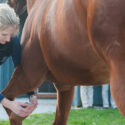
What Diagnostics are Available for Common and Complex Equine Lameness?
Dr. Taralyn McCarrel’s journey into equine lameness began with her early experiences riding and working at a hunter barn. Recognizing the critical importance of soundness for both horses and riders, she developed a keen eye and ear for detecting lameness issues. Her passion for veterinary medicine led her to graduate from the Ontario Veterinary College…

March Kicks off Vaccination Season!
Safeguard Your Equine Partner Equine Guelph’s Vaccination Equi-Planner is a cutting-edge healthcare tool designed to help horse owners protect their valuable equine partners. This innovative tool provides a starting point to discuss a comprehensive vaccination schedule with your veterinarian that will be tailored to each horse’s unique needs, aiming for optimal health and performance. Provide Protection for Your…
Equine Guelph’s “Colic Prevention Month” Serves Easy-to-Digest Tips
February is Colic Prevention Month at Equine Guelph, when all horse owners are encouraged to raise their awareness about colic, the number one killer of horses. Take 10 minutes and visit the FREE interactive Colic Risk Rater (TheHorsePortal.ca/ColicTool). Valuable feedback is provided on the risk of colic to your horse(s) based on your current management practices. Horse owners that…

World Rabies Day ‘One Health’ Approach and the Horse Owner
On September 28, 2024, Global Alliance for Rabies Control (GARC) coordinates World Rabies Day and this year’s theme is ‘Breaking Rabies Boundaries’. In the ‘One Health’ approach, every sector takes responsibility in the effort to tackle rabies. Rabies is a viral infection of the nervous system known to be problematic in carnivores and bats, although…

Senior Horse Education Month Features Arthritis and Pain Recognition
Chronic pain and lameness resulting from osteoarthritis (OA) and other musculoskeletal conditions are the most common causes of poor quality of life in senior horses. In the month of September, Equine Guelph promotes Senior Horse Education, increasing awareness of ways caregivers can be the best advocates for the health and welfare of their senior equines. …

Preventing Dehydration in Horses
Authors: Dr. Mike Lindinger & Gayle Ecker With exercise, the body temperature rises. This heat must be dissipated, or the horse will literally “cook”! The body cools itself through the evaporation of sweat, so sweating is especially important for the exercising horse. The sweat contains water and electrolytes, or salts. The main electrolytes are sodium,…
Follow Equine Guelph

🐴 When a large animal is in trouble… every second counts. ![]()
![]() Don’t panic
Don’t panic ![]() -Know who to call
-Know who to call ![]() -Have the right tools
-Have the right tools ![]() -Use safe, effective techniques
-Use safe, effective techniques ![]()
![]() Preparation isn’t optional—it’s essential.
Preparation isn’t optional—it’s essential. ![]() Be ready before an emergency happens.
Be ready before an emergency happens. ![]()
![]() Take the Large Animal Emergency Rescue (LAER) course. Now available ON-DEMAND @TheHorsePortal.ca.
Take the Large Animal Emergency Rescue (LAER) course. Now available ON-DEMAND @TheHorsePortal.ca. ![]()
![]() Flexible format | Certificate of Completion | Self-paced (1-year course access)
Flexible format | Certificate of Completion | Self-paced (1-year course access) ![]()
![]() @albertaequestrian, @EquineYukon, @equestrianNovaScotia, @HorseCouncil, @IslandHorseCouncil, @ManitobaHorseCouncil, @EquineNB, @NLequine, @onequestrian, @SaskHorse, @AceraInsurance, @EquestrianCan
@albertaequestrian, @EquineYukon, @equestrianNovaScotia, @HorseCouncil, @IslandHorseCouncil, @ManitobaHorseCouncil, @EquineNB, @NLequine, @onequestrian, @SaskHorse, @AceraInsurance, @EquestrianCan
"Being new to equine journalism is a strength."![]() Meet Your Equine Journalism Instructor: Anna Sochocky.
Meet Your Equine Journalism Instructor: Anna Sochocky.![]()
![]() Learn from an award-winning equine journalist, nonfiction writer, and communications professional in #EquineGuelph’s accredited, 12-week online #Equine Journalism course!
Learn from an award-winning equine journalist, nonfiction writer, and communications professional in #EquineGuelph’s accredited, 12-week online #Equine Journalism course!![]()
![]() Anna Sochocky is the owner of Equi-Libris LLC and has built a successful career writing about horses, health, and history. Her work has appeared in leading equine publications including Equus Magazine, Western Horseman, Horse Illustrated, The Chronicle of the Horse Untacked, Sidelines Magazine, and The Horse Magazine, as well as numerous literary journals.
Anna Sochocky is the owner of Equi-Libris LLC and has built a successful career writing about horses, health, and history. Her work has appeared in leading equine publications including Equus Magazine, Western Horseman, Horse Illustrated, The Chronicle of the Horse Untacked, Sidelines Magazine, and The Horse Magazine, as well as numerous literary journals.![]()
![]() A multiple award-winning writer, Anna has been recognized by American Horse Publications, New Mexico Press Women, and the National Federation of Press Women. She also received the 2024 New Mexico Writers Douglas Preston Travel Grant and has held prestigious literary residencies with A Room of Her Own Foundation and the Loft Literary Center.
A multiple award-winning writer, Anna has been recognized by American Horse Publications, New Mexico Press Women, and the National Federation of Press Women. She also received the 2024 New Mexico Writers Douglas Preston Travel Grant and has held prestigious literary residencies with A Room of Her Own Foundation and the Loft Literary Center.![]()
![]() Beyond her writing achievements, Anna brings extensive communications expertise from her career as a media relations director and legislative affairs consultant. She has developed and led successful communications strategies, secured national media coverage, cultivated media relationships, prepared leaders for interviews, and managed online and social media communications programs reaching tens of thousands of people.
Beyond her writing achievements, Anna brings extensive communications expertise from her career as a media relations director and legislative affairs consultant. She has developed and led successful communications strategies, secured national media coverage, cultivated media relationships, prepared leaders for interviews, and managed online and social media communications programs reaching tens of thousands of people.![]()
![]() Holding a Master of Arts in Creative Writing from Hamline University, where she graduated Magna Cum Laude and received the Outstanding Creative Thesis Award, Anna combines academic excellence with real-world industry experience.
Holding a Master of Arts in Creative Writing from Hamline University, where she graduated Magna Cum Laude and received the Outstanding Creative Thesis Award, Anna combines academic excellence with real-world industry experience. ![]()
![]() As a lifelong equestrian and horse owner with experience in hunter-jumper competition and dressage, she understands both the horse industry and the stories that shape it.
As a lifelong equestrian and horse owner with experience in hunter-jumper competition and dressage, she understands both the horse industry and the stories that shape it.![]()
![]() Hone your writing skills with Equine Guelph's 12-Week Equine Journalism course offered September 14, 2026 in partnership with @UofGuelphSCS.
Hone your writing skills with Equine Guelph's 12-Week Equine Journalism course offered September 14, 2026 in partnership with @UofGuelphSCS.![]()
![]() Early Bird pricing ends August 15th!
Early Bird pricing ends August 15th!![]() uoguel.ph/eq-journalism
uoguel.ph/eq-journalism![]()
![]() #EquineMedia #EquineJournalism #HorseStories #EquineGuelph #EquineCareers #WorkWithHorses
#EquineMedia #EquineJournalism #HorseStories #EquineGuelph #EquineCareers #WorkWithHorses
What makes a great equine article?![]() It’s not just heart—it’s facts, clarity, and credibility.
It’s not just heart—it’s facts, clarity, and credibility.![]()
![]() Hone your writing skills in Equine Journalism with #EquineGuelph's online, accredited, 12-Week Equine Journalism course offered September 14, 2026 in partnership with @UofGuelphSCS.
Hone your writing skills in Equine Journalism with #EquineGuelph's online, accredited, 12-Week Equine Journalism course offered September 14, 2026 in partnership with @UofGuelphSCS. ![]()
![]() Early Bird pricing ends August 15th!
Early Bird pricing ends August 15th! ![]()
![]() uoguel.ph/eq-journalism
uoguel.ph/eq-journalism![]()
![]() #EquineMedia #EquineJournalism #HorseStories #EquineGuelph #EquineCareers #WorkWithHorses
#EquineMedia #EquineJournalism #HorseStories #EquineGuelph #EquineCareers #WorkWithHorses